 QR Code Scanner
The barcode on a cosmetic product is a GTIN (a UPC or EAN number) that identifies that exact product and the brand that licensed the number. Scanning the barcode lets you look up the product, its ingredients and its prices. A cosmetic barcode does not tell you when the product expires, where it was made or whether it is genuine: for that, read the batch code, the expiry or PAO symbol, and check the seller.
Barcodes on lipstick, foundation and shampoo look like they should hold a lot of secrets, and a lot of advice online claims they do. In reality the number on a cosmetic barcode is a product ID, nothing more. That is still useful, because a product ID is the key to everything else: ingredient lists, safety ratings and prices are all looked up from it (a barcode doesn't contain the price either). Here is what each part of the code means, how to scan it, and where the information people actually want (expiry, origin, authenticity) is printed instead.
What do the numbers on a cosmetic barcode mean?
The numbers on a cosmetic barcode are a GTIN (Global Trade Item Number): a product ID for one exact item, such as a single shade and size, licensed to the brand through the GS1 system. The numbers do not encode ingredients, dates or the country of manufacture.
Cosmetics use the same retail barcodes as groceries. In the US and Canada you will usually see a 12-digit UPC-A; in Europe and most other countries a 13-digit EAN-13. Every variant gets its own number, so a 30 ml and a 50 ml bottle of the same serum, or two shades of the same lipstick, have different barcodes.
| Part of the number | What it tells you |
|---|---|
| First 2–3 digits (GS1 Prefix) | Which GS1 member organization issued the number. Not the country of manufacture. |
| Following digits (company number) | The brand or company that licensed the number. |
| Next digits (item reference) | The specific product, shade or size, chosen by the brand. |
| Last digit (check digit) | A value calculated from the other digits, so a scanner can catch a misread. |
The split between company number and item reference varies from brand to brand, so you can't reliably read a brand name out of the digits by eye. Scanning the barcode and looking the number up is the practical way to identify a cosmetic product.
How do you scan a cosmetic barcode on iPhone?
To scan a cosmetic barcode on iPhone, use a barcode scanner app, because the built-in Camera app is designed for QR codes rather than product barcodes. The free QR Code Scanner * Barcode Reader app reads UPC and EAN barcodes on iPhone and iPad running iOS 16 or later. Our guide to scanning a barcode on iPhone covers the other methods. Every feature is free to use up to a usage limit; an optional Premium in-app purchase removes the limits.
- Open the scanner in QR Code Scanner * Barcode Reader. No account is needed.
- Point the rear camera at the barcode on the box, tube or bottle so the whole row of bars is in the frame. On a curved tube, turn the product so the bars sit flat toward the camera, or scan the barcode on the outer box. If you only have a photo of the product, you can scan the barcode from the picture instead.
- Hold steady for a second. The app reads the UPC or EAN number.
- Read the result. For cosmetics, the app shows an ingredient risk analysis with flagged ingredients such as parabens, silicones and harsh surfactants, each with a risk level. You can also compare the product's price across retailers.
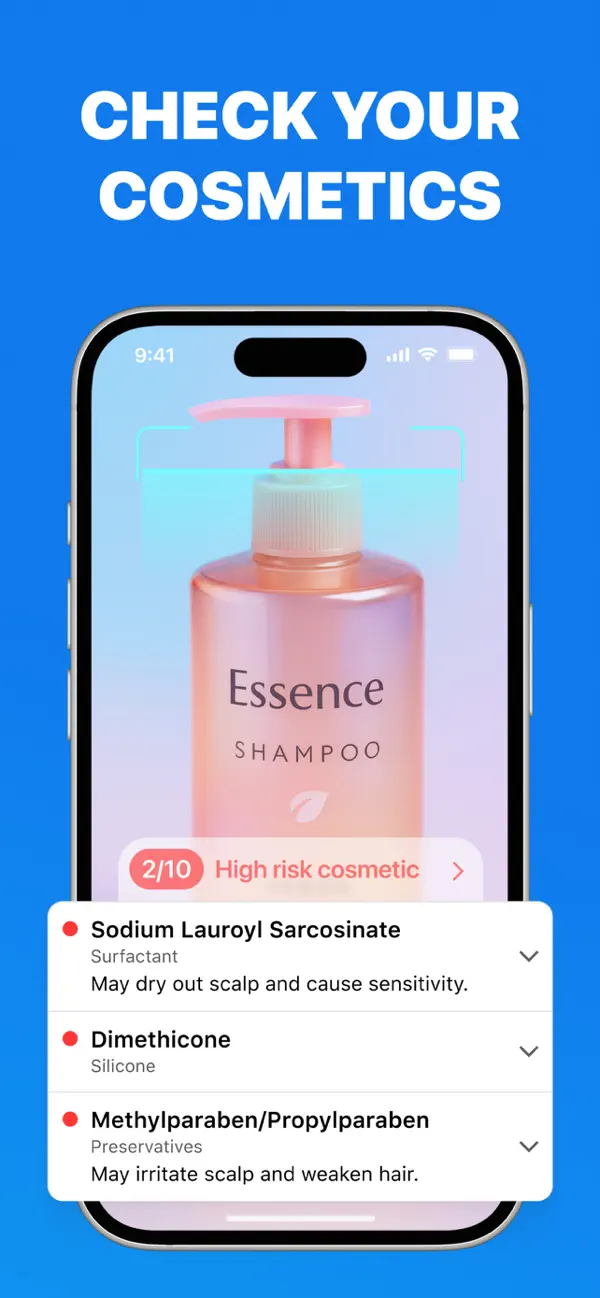
Without an app, type the digits printed under the bars into a search engine. That usually finds the product listing, though without an ingredient analysis. Looking up a cosmetic product by its barcode needs an internet connection either way, because product details come from online databases. To understand what the ingredient flags mean, see our cosmetic ingredient scanner guide.
What can't a cosmetic barcode tell you?
A cosmetic barcode can't tell you where the product was made, when it expires, or whether it is genuine. The barcode is a product ID, and each of those three details is printed or checked somewhere else.
Does a cosmetic barcode show the country of origin?
No. A popular myth says the first digits of a barcode reveal the country of manufacture, but GS1's explanation of barcode prefixes says the prefix only shows which GS1 member organization issued the number, not where the product was made or by whom. A brand can license its numbers in one country and make its cosmetics anywhere. Look for "Made in" on the packaging.
Does a cosmetic barcode show the expiry date?
No. The barcode is the same for every unit of a cosmetic product, whether it was made last month or three years ago, so the barcode carries no date. Expiry information is printed separately (see the next section).
Can a barcode prove makeup is genuine?
No. A barcode is a printed number, and counterfeiters can copy the barcode of the real product, so a scan that brings up the right lipstick only proves the number exists. The reverse is a useful warning sign: if scanning the barcode brings up a different product, or nothing at all for a big-name brand, look more closely before you buy. Some brands add a unique, serialized QR code on skincare and beauty products for authenticity checks, which can do what the barcode can't.
Where do you find the expiry date on cosmetics?
The expiry information on cosmetics is printed separately from the barcode: look for a best-before date, an open-jar PAO symbol such as 12M, or a batch code that the brand can decode into a manufacturing date.
| Marking | What it looks like | What it tells you |
|---|---|---|
| Batch (lot) code | Short letters and numbers, often stamped on the base, the crimped end of a tube, or the box flap | The production run. The brand can decode it to the manufacturing date. |
| PAO symbol | An open jar with a number such as 6M, 12M or 24M | How many months the product stays good after you first open it. |
| Best-before date | A date next to an hourglass symbol or the words “best used before the end of” | The date to use it by. EU rules require it on cosmetics that last 30 months or less. |
| Expiration date | “EXP” with a date | Found on sunscreens and SPF products, which the US regulates as drugs. |
Rules differ by market. Under EU Regulation 1223/2009, Article 19, every cosmetic product must show a batch number plus either a date of minimum durability or, for products that last more than 30 months, a period-after-opening symbol, as the Irish regulator's guide to cosmetic product labelling summarises. In the US, the FDA's page on shelf life and expiration dating of cosmetics says no US law requires expiration dates on cosmetics; the manufacturer is responsible for determining shelf life. Sunscreens and SPF products are regulated as drugs, so they carry expiration dates. A cosmetic sold in the US may therefore have no date at all, and the batch code is the best clue.
How do you check a cosmetic batch code?
- Find the batch code. Check the bottom of the bottle or jar, the sealed end of a tube, and the outer box. A cosmetic batch code is usually 4–10 characters and is often embossed rather than printed.
- Compare box and container. On genuine products the batch code on the box normally matches the code on the container. A mismatch, or a code missing from one of them, is worth questioning.
- Decode the date. Each brand uses its own batch code format, so the most reliable way to decode it is to ask the brand's customer service. Online batch code checkers can estimate the date for many brands; treat their answer as a guide, not a guarantee.
- Apply the PAO. Once a product is opened, count the months on the open-jar symbol from the day you opened it. Throw out any cosmetic that smells off, separates or changes color, whatever the date says.
How do you get a barcode for your cosmetic products?
To get a barcode for cosmetic products, license GTINs from GS1, the organization that manages retail barcodes, through your country's GS1 member organization. Most retailers and marketplaces will not list a product without one.
In the US, GS1 US's getting-started guide offers two options. A single GTIN suits a brand with only a few products: it cost $30 with no annual renewal fee when we checked in November 2026. A GS1 Company Prefix suits a growing range of products, shades and sizes: it lets you create many barcodes and has an initial fee plus an annual renewal fee. Outside the US, go to your country's GS1 member organization. Give each shade and size its own number.
Avoid cheap barcode numbers resold by third parties. Those numbers are licensed to someone else, and retailers can check who a number belongs to in the GS1 database. Once you have a licensed number, any barcode generator can draw the bars for your packaging artwork.
Scan any cosmetic barcode
See flagged ingredients and compare prices before you buy. Free, no ads, no account.
Frequently asked questions
What does the barcode on my makeup mean?
The barcode on makeup is a GTIN, usually a 12-digit UPC in the US and Canada or a 13-digit EAN elsewhere. It identifies one specific product, such as a single shade and size, and the brand that licensed the number from GS1. The last digit is a check digit that lets scanners catch misreads.
How do I check if my makeup is real using the barcode?
A barcode alone cannot prove makeup is real, because counterfeiters can copy the barcode of the genuine product. A scan that brings up a different product, or nothing for a big-name brand, is a warning sign. To judge authenticity, buy from the brand or an authorized retailer, compare the packaging with a product you trust, and check that the batch code on the box matches the one on the container.
How do I find out when my makeup expires?
Look on the packaging for a best-before date, which EU rules require on cosmetics that last 30 months or less, and for the open-jar PAO symbol, such as 12M, which shows how many months the product stays good after opening. If neither is printed, the batch code can reveal the manufacturing date: the brand's customer service can decode it.
Does the barcode on cosmetics show where they were made?
No. GS1 states that the first digits of a barcode show which GS1 member organization issued the number, not the country where the product was made or who made it. Check the label for the country of origin instead.
How do I get a barcode for my cosmetic products?
License barcode numbers (GTINs) from GS1, the organization that manages retail barcodes. In the US, GS1 US sells a single GTIN for brands with only a few products and a GS1 Company Prefix for growing product ranges. Give each shade and size its own number, and avoid resold numbers that are not licensed to your brand.